
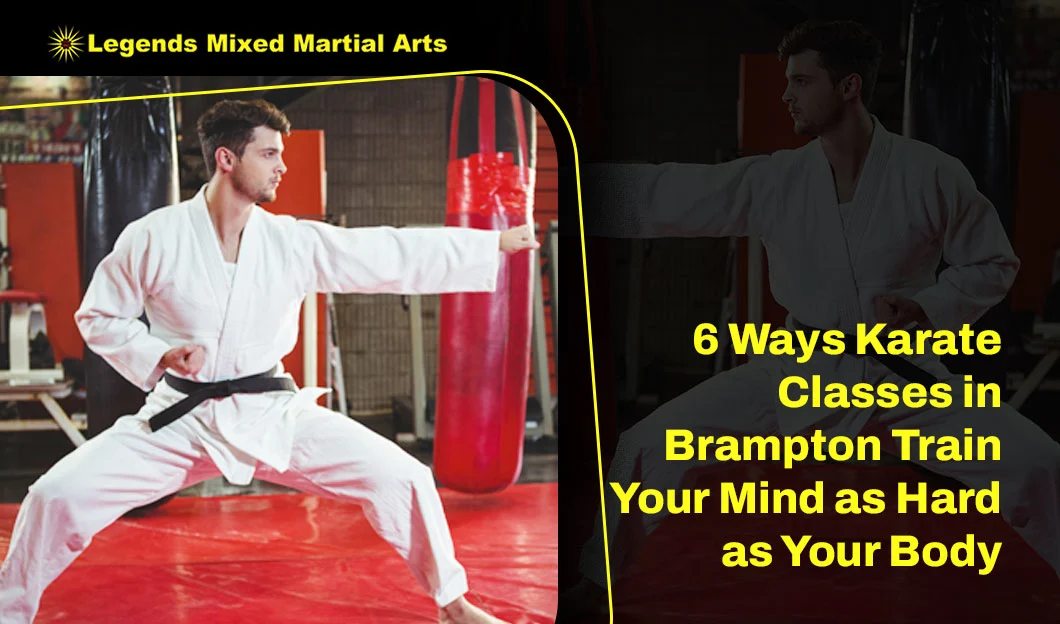
Bramptonians join karate classes for a variety of reasons, including to get fit, to lose weight, and to learn self-defence. These are valid goals. But what surprises all students is how deeply their training also changes the way that they think.
Students in Brampton who train in karate often notice changes in their thinking before noticing changes in their body. Even before any improvement on the mat occurs, they become more patient in daily life and their focus sharpens before their reflexes do.
Karate is not just about physical training. Every drill, every kata (a structured sequence of movements in karate), and every sparring session is designed to challenge both the body and the mind.
Here you will learn six ways in which karate training reshapes how your mind works and why those mental results matter just as much as any physical improvements.
Key Takeaways:
- Kata practice builds sustained concentration that transfers into work, study, and daily focus.
- Controlled sparring trains the nervous system to respond to stress calmly rather than reactively.
- The belt progression system replaces dependence on motivation with genuine, compounding self-discipline.
- Confidence that is built through achievement in karate holds under real pressure.
- Partner drills develop emotional regulation by exposing students to manageable frustration in a structured setting.
What Karate Does to Your Head Before It Changes What You See in the Mirror
The six points below explain what is happening inside your mind during consistent, structured karate classes in Brampton.
How Does Karate Training Build Sharper, Sustained Focus?
Kata practice requires you to perform a precise sequence of movements (sometimes 20 or more) in a row, entirely from memory. There is no room for mental wandering. Your attention must stay fixed on your stance, breath, and timing all at once.
This kind of focused concentration does not come naturally to most adults. It develops through deliberate, consistent repetition across many sessions. Over several weeks of karate classes, students regularly report this quality of attention carrying into their work, study, and conversation.
Psychologists call this ‘sustained attention’, i.e., the ability to be focused on a single task without being distracted. Karate training builds this habit through structured practice.
How Do Karate Classes Train Your Stress Response?
The practice of karate creates genuine pressure on students but keeps them in control of both their body and their mind. Sparring and training with partners help students get used to the feeling of having their body and mind activate under pressure and then calm down.
Over time your nervous system learns to stay calm under this pressure instead of responding with panic or aggression. This is also why karate classes help with children’s mental health: children who train regularly in karate develop a measured response to frustration rather than defaulting to impulse.
Different types of karate, like Goju-ryu and Kyokushin, which require students to train regularly in pairs, help in acquiring this quality more quickly. The reasoning here is simple: when you regularly face this type of pressure in your training, it helps your body and mind develop a natural way of handling this form of stress.
How Does Karate Build Self-Discipline?
Karate does not teach you discipline through instruction or encouragement. You build it by doing the same stances, the same blocks, and the same combinations hundreds of times in a single session. There is no shortcut and no workaround. You either show up consistently and pay attention or you do not progress.
What happens over months of that kind of training is that you stop relying on motivation, which comes and goes, and start running on habit instead. Students who regularly attend karate classes at Brampton gyms like Legends MMA over six months find that the work ethic they built on the mat starts showing up in their jobs and daily routines without any conscious effort. Younger students absorb this same discipline even faster, which is why the benefits of karate for children go well beyond what most parents expect when they first sign up.
When people weigh up the advantages and disadvantages of karate, self-discipline comes up most consistently in the former category. Experienced instructors will also tell you plainly that progress in karate is slow by design, and that is exactly what makes it real.
How Does Karate Training Build Confidence?
Karate does not hand you confidence along with a belt. You earn your next level only when your technique, timing, and composure meet a standard your instructor has set. Your grading reflects what you can actually do, not how many classes you have attended.
Because your advancement is tied directly to what you perform, the confidence that follows is grounded in something real. When you train in karate classes, that confidence travels with you into unfamiliar environments and does not go away. Confidence built on what you have done does not fall apart under pressure the way that confidence built on praise does.
Students consistently describe this newfound confidence as one of the most unexpected benefits of karate training, because most people join expecting physical results only. It shows up in job interviews, difficult conversations, and situations where there is no script to follow.
How Does Karate Develop Emotional Control Under Pressure?
Most people do not expect karate to improve their emotional control, but it does. Karate does not remove frustration from training; it puts you directly in front of it. Sparring means missed timing, repeated errors, and facing someone better than you—all in a safe and supervised environment.
What karate teaches you is to notice when your frustration is building, to breathe through it, and to continue your work without losing your composure. Do that enough times across months of training and it stops being something you think about. It just becomes how you respond.
Students in Brampton who attend Legends MMA karate classes find that they use this control in their daily lives without thinking about it.
How Does Long-Term Karate Training Build Genuine Resilience?
Resilience to stress builds when you face difficulties repeatedly and give yourself time to learn from them. Karate gives you that resilience. You train hard, make mistakes under sparring pressure, and come back the following week knowing specifically what needs work.
Over time you start to understand that a bad session does not mean you cannot ‘do’ karate. Students in Brampton who train in karate carry that understanding into far more unpredictable environments in their regular lives.
Karate training does not fast-track this process, and it is not meant to. The slower the progress, the more reliable the resilience you build.
Training in karate does far more than improve your fitness or sharpen reflexes. Every kata, every drill, and every sparring session is built specifically to challenge your mind alongside your body. The focus, discipline, emotional control, and resilience you build on the mat are not byproducts of physical training. They are direct outcomes of how karate is structured and taught from the very first class. If you are ready to experience this for yourself, our karate classes offer a properly guided environment for students in and around Brampton. Get in touch with Legends MMA today.