
Originating in Thailand, Muay Thai is a martial art that has gained worldwide popularity for the versatility and effectiveness of its combat and striking techniques. Practicing it can be an exciting way to boost your mental and physical health.
On that note, learning various Muay Thai kicks is a great way to support your fitness, mental discipline, self-defence skills, or bid to become an MMA professional. Led by professional trainers committed to safety, respect, and their students’ growth, Legends MMA offers Muay Thai classes for students interested in learning this discipline.
Here, we discuss the sport’s training essentials, safety tips, basic etiquette, common mistakes to avoid, how to prevent injuries, and basic Muay Thai kicking techniques.
Let’s get started!
Training Essentials of Muay Thai
Muay Thai-style kickboxing has gained popularity in Brampton as an alternative to traditional gym workouts, helping improve its students’ endurance, strength, mental focus, and coordination. Training starts with coaches providing an understanding of training essentials so beginners can apply them in practical lessons. These include:
Safety Tips
Maintaining safety is the foundation of learning any martial art, including Muay Thai. Here are some safety tips that beginners should follow to maintain their own and their training partners’ well-being:
- Start with the proper gear: Mouth guard, shin guards, boxing gloves, hand wraps, and ankle supports are among the most important pieces of gear that protect you from injury and help you maintain the academy’s safety protocols.
- Listen to your coach: Your coach possesses the knowledge and expertise to train you in Muay Thai safely and efficiently, so always listen to their instructions. A qualified trainer can fix your mistakes before they cause injury. Don’t hesitate to tell them if you experience pain or discomfort, and be sure to trust their guidance. Trainers at Legends MMA are highly experienced in various martial arts disciplines, including Muay Thai, and can guide you effectively to ensure your safety while learning and performing.
- Warm up and cool down properly: Warming up and cooling down are essential steps to remember when starting your Muay Thai lessons. During warm-up activities, your heart rate increases, optimizing blood flow to your muscles and preparing your joints and muscles for movement. Cool-down exercises safely stabilize your heart rate, blood pressure, and body temperature, which helps prevent muscle soreness and stiffness. Many beginners injure themselves by rushing into training without preparing their bodies through these steps.
Basic Etiquette of Learning Muay Thai
Every academy offering Muay Thai training in Brampton has some basic etiquette built on respect and discipline. This makes it essential for beginners to fit into its culture and build positive relationships within the community. This includes:
- Be punctual and stay engaged: Timely attendance will allow you to hear all important instructions and maintain the flow of learning. Staying focused and engaged during training sessions will help you better understand your coach’s instructions, thereby increasing your learning speed.
- Be respectful towards the academy and your training partner: Muay Thai is a partner-based sport, so it is important to treat your training partner with respect, kindness, and patience to maintain a healthy learning environment. During the initial learning stage, beginners are encouraged to focus on bodily control rather than physical aggression.
Common Mistakes Experienced by Early Learners
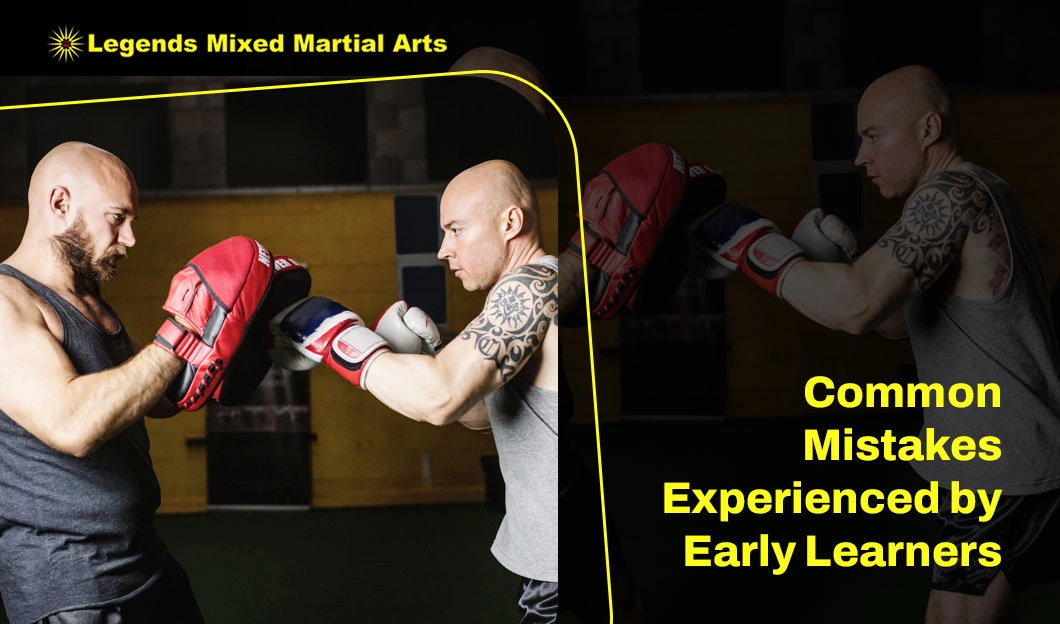
Muay Thai offers many health benefits, like weight management, improved cardiovascular health, and maintaining bone density and joint health. But you should also be aware of some of the mistakes beginners make so as not to hamper your learning. Let’s have a look at these:
- Comparing yourself with others: Every student learns at a different pace, so comparing yourself to more experienced training partners can lower your self-confidence. This can, in turn, hinder your progress.
- Trying to learn techniques quickly: Consistency is more important than intensity. Many beginners push themselves to learn at a fast pace, but consistent progress leads to improved outcomes.
- Not taking time to recover: Knowing and listening to your body can help you avoid injury. If you don’t invest enough time to recover between training sessions, it can lead to injuries and sore muscles. So, stop immediately when you feel pain and allow yourself to take a few days’ rest to recover properly. Ignoring pain or pushing yourself too hard can lead to injuries, preventing you from attending classes for days or months.
How to Prevent Injuries in Muay Thai
Like any other intense physical activity, when you start learning Muay Thai, it comes with risks of injury. Knowing how to prevent these injuries can lead to long-term progress.
- Hydration and Nutrition: Proper hydration cools your body and maintains joint mobility, while dehydration can lead to exhaustion, muscle cramps, fatigue, and an increased risk of muscle injury. Maintain a balanced diet rich in complex carbohydrates, healthy fats, and proteins to build strength and support fast muscle recovery.
- Choose Training Partners Wisely: Train with individuals who have similar skill levels to yours. Also, discuss beforehand the intensity of striking with your partner and other related topics, such as your goal for the session. This approach will help you both continue the training properly and minimize the risk of injury.
- Maintaining Hygiene: Muay Thai involves close skin contact between partners as they grab each other around the neck, head, and arms during training and performance. So, taking some preventive measures like showering immediately with antibacterial soap after training, washing your hand wraps daily, and wearing clean apparel can help prevent bacterial and fungal infections.
Important Muay Thai Kick Techniques
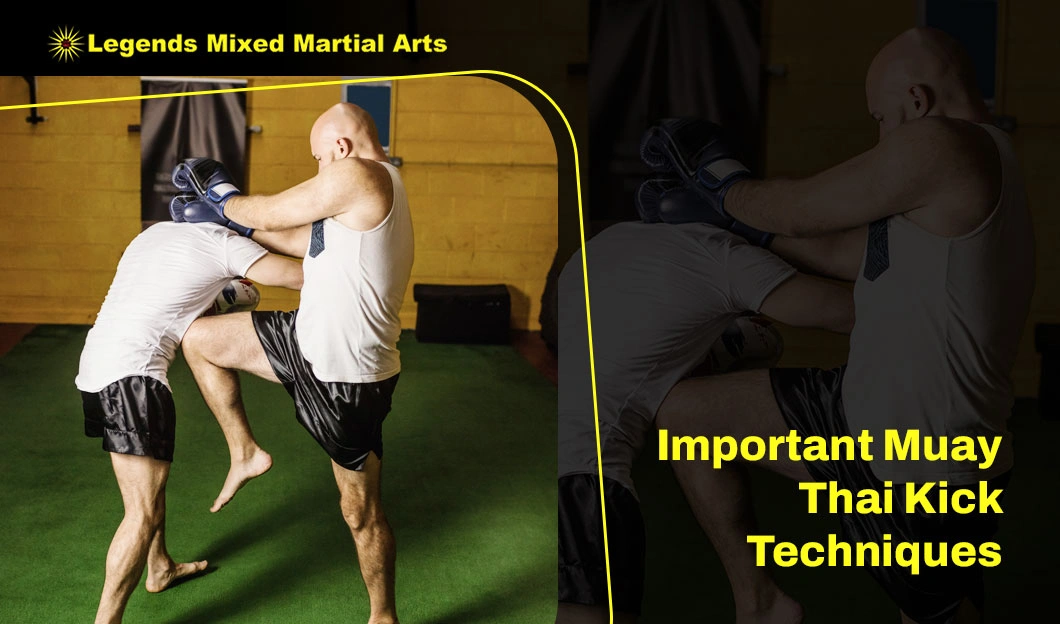
In Muay Thai, almost every body part is involved in defence and movement, but kicking is the cornerstone of the sport’s offensive and defensive strategies. Let’s take a close look at the basic techniques of Muay Thai kicks.
Roundhouse
The roundhouse kick is a fundamental and powerful Muay Thai kicking technique. The movement in this kick starts with the hip, which sets the foundation for momentum and power. When the body turns, the kicking leg is driven by kinetic energy and muscle coordination. In this kicking technique, the shin serves as the main striking surface, ensuring a controlled yet powerful impact.
Push Kick
A long-range straight foot thrust is called a push kick or ‘teep’ kick. (‘Teep’ is Thai for ‘kick’.) This kick is used to target the opponent’s face, abs, hips, or solar plexus. It helps keep your opponent at a distance to set up a calculated and skillful attack. A bold, disruptive movement in the push kick helps to dominate the opponent.
Low Kick
This kick targets the opponent’s thigh, aiming at the longest and widest nerve in the human body: the sciatic nerve. Starting in the lower back, this nerve continues through the thighs and legs, ending at the feet. Attacking this nerve reduces the opponent’s mobility, thus decreasing their will to perform. While performing a low kick, you need to place your legs ahead of your body and target your opponent’s inner or outer thigh, lower abdomen, or knees.
Switch Kick
This technique involves momentarily changing stances to throw a kick from the opposite side. For example, if you are left-handed, then your right leg will generally be in front. When you switch, your right leg will become your power leg (the leg that is positioned furthest from the opponent), which allows you to be ready to attack the opponent’s left side.
Jumping Kick
This technique involves jumping to deliver a high-power, high-speed kick. The power and momentum generated by this kick are very high, making it a significant Muay Thai technique. Getting admitted to a reputable martial arts academy like Legends MMA can help you learn this technique very efficiently.
Diagonal Kick
This type of kick targets the opponent’s upper thighs, arms, lower part of the rib cage, and area around the ears. To perform a diagonal kick, you need to be inclined towards the kick’s opposite direction. The leg is swung upward, and just before it hits the target, the foot needs to be twisted.
Straight Foot Jab
Also called ‘teep trong’, this linear striking technique is used to throw opponents off balance or to counter their attacks. This technique prevents your opponent’s forward momentum, controls the distance between you and them, and is generally aimed at their midsection.
Learning Muay Thai kicks can be an exciting and fulfilling experience when you are aware of the training essentials and basic kicking techniques, and Legends MMA can teach you this. Listening to your body, following your trainer’s instructions, and maintaining a balanced diet can help you start your learning journey efficiently.