
One of the best things you do for your body and mind is to start boxing. Boxing improves your cardiovascular fitness, enhances your reaction time, and fosters a real sense of discipline and commitment.
However, many people who sign up for boxing classes in Brampton walk in with habits that negatively affect their ability to succeed. Some don’t even realize that these aren’t flaws of character; they simply weren’t told about them before taking up the so-called sweet science.
New students often focus too much on punching power. That focus, while understandable, gets in the way of learning the fundamentals that make for a good boxer. The techniques that you build early have a habit of sticking—including bad habits.
In this blog, you will learn about the most common mistakes beginners make in Brampton boxing and what to do about them.
The Mistakes That Beginners Commonly Make in Boxing

Most new boxers share a predictable set of early missteps. These errors are not about effort or attitude. They come from not knowing what the sport demands of you before you start. Technique, timing, and mental habits all need attention from the very first session. The mistakes below are the ones coaches in Brampton boxing programs, including ours, see most consistently in new students. And each is fixable once identified.
Skipping the Basics and Rushing Straight to Combinations
New students often want to throw complex combinations within the first few sessions. This is one of the most common patterns seen in boxing classes across Brampton and elsewhere.
Combinations work better if your fundamental skills are developed proficiently. Jabs and crosses involve three distinct mechanics related to the hips, shoulders, weight distribution, and maintaining your guard. Rushing past these fundamentals creates the appearance of decent effort punches, but the results are ineffective.
A boxer who understands the basic skills of their sport builds a foundation that holds up under pressure. If a beginner doesn’t go through this process, they will eventually have to develop compensatory movements, which become increasingly difficult to address as the boxer continues to develop.
Remember:
- Stance and guard positioning come before any combination work.
- Weight distribution affects both balance and punch output.
- Proper hip engagement is what generates power, not arm strength alone.
Ignoring Defence and Focusing Only on Offence
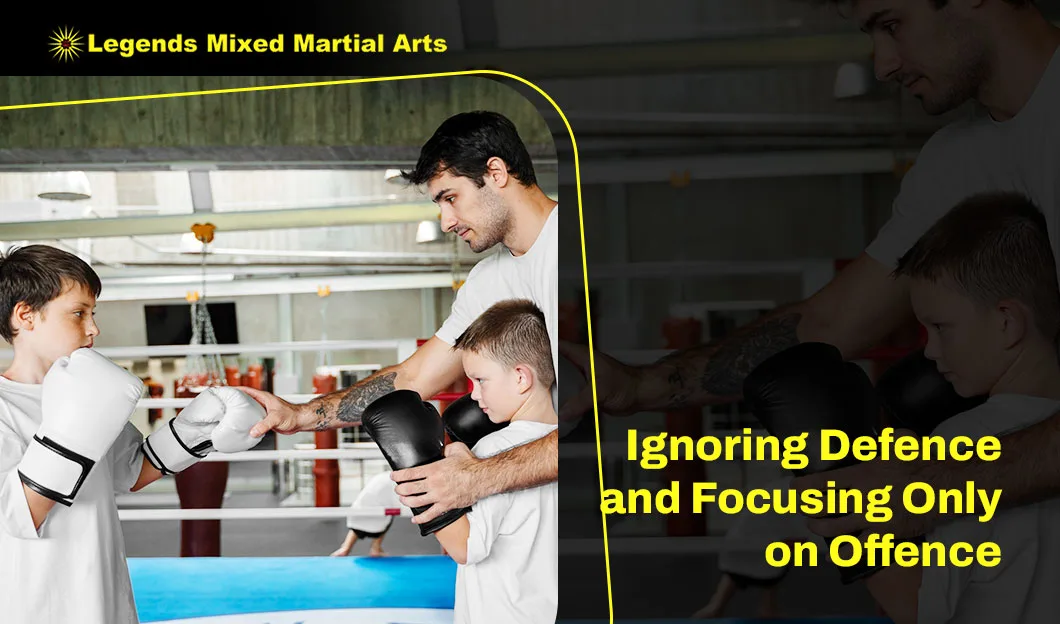
Many beginners treat defence as a secondary concern. They want to hit. They are less interested in learning how not to get hit.
This mindset creates a real gap in their development. Boxing is built on the idea that offence and defence happen at the same time. Head movement, slipping, and guard work are not separate skills; they are built into every exchange.
Structured boxing training in Brampton puts equal weight on both sides of the game. Students who skip defence drills find themselves flat-footed during sparring. They also tend to drop their guard after they throw, which is one of the most correctable but most repeated errors in beginner boxing.
Remember:
- Head movement drills train the reflexes needed to avoid counter punches.
- Guard habits formed early become automatic over time.
- Defence awareness changes how a boxer reads an opponent’s movement.
Holding Your Breath During Rounds
Breath control is rarely explained to beginners in enough detail. Most new students hold their breath during combinations or tense up during padwork.
Holding your breath tightens your whole body. It slows punch speed, reduces endurance, and makes recovery between rounds much harder. The body needs oxygen to keep muscles firing, and that supply gets cut when breathing stops during activity.
Exhaling sharply on each punch is a trained habit. It also tightens the core at the moment of impact, which increases force and protects the body. This is something experienced coaches focus on early in Brampton boxing programs for exactly that reason.
Overtightening the Fist Before Contact
A common mistake is squeezing the fist as tightly as possible throughout the entire punch. Beginners often believe a tighter fist means a harder punch.
In practice, the fist should stay relatively relaxed through most of the punch and tighten only at the moment of contact. Squeezing throughout creates tension in the forearm and shoulder. That tension slows the punch and tires the arm far more quickly during longer rounds.
This is not intuitive. Most people associate tightness with strength. In boxing, efficiency comes from relaxed speed followed by a sharp point of contact. Boxing lessons taught by experienced coaches in Brampton address this early, since it affects both punch quality and injury prevention.
Neglecting Footwork in Favour of Punch Volume
New boxers tend to plant their feet and focus entirely on throwing punches. Footwork feels less exciting than combinations, so it gets ignored.
But footwork controls the entire fight. It determines range, angle, and exit after a punch lands. A boxer with poor foot movement becomes predictable. An opponent, or a training partner during sparring, can read exactly where your punches are coming from and time a counter with very little effort.
In structured boxing classes across Brampton and surrounding areas, footwork drills are built into every session for this reason. Skipping those drills or treating them as a warm-up exercise misses the point entirely.
Remember:
- Lateral movement creates angles that straight-line punchers cannot reach.
- Proper weight shift during footwork sets up cleaner, more powerful punches.
- Exit steps after combinations reduce the window for a counter.
Treating Every Round Like a Sparring Match
Some beginners approach every drill and padwork round with maximum effort. They go hard on the bag, push the pace on mitts, and treat every session like a test of toughness.
This creates fatigue without producing proportional improvement. Boxing requires sensitivity; padwork is for learning how a combination flows; and bag work is for building timing, accuracy, and conditioning. When a beginner boxer goes full intensity on everything, their focus shifts away from quality movement and onto survival.
Boxing training at a well-run gym in Brampton, like Legends MMA, is deliberately structured for intensity. Light rounds exist to build skill, while hard rounds build toughness. Using the wrong intensity at the wrong time produces tired technique, not better boxing.
How to Correct These Mistakes and Build Good Habits Early
Knowing what these mistakes are is only part of the picture. Understanding how to replace them with better habits is what moves a student forward.
Slowing Down to Build the Right Movement Patterns
The most effective correction for most beginner errors is simply slowing down. This is counterintuitive in a sport that looks fast, but slower drilling at the right technique beats fast drilling at the wrong one every time.
Shadow boxing without a bag or partner is one of the most underused tools for new students. It forces attention onto movement and mechanics without the distraction of impact. Students who spend time in front of a mirror during shadow boxing catch errors they would not otherwise notice.
Well-structured boxing lessons in Brampton will typically include a section of drilling before bag work begins. Using that time well is entirely up to the student.
Remember:
- Drilling at half speed builds the correct motor pattern before it speeds up naturally.
- Mirror work gives immediate visual feedback on stance, guard, and movement.
- Repetition at low intensity creates the muscle memory that shows up later under pressure.
Asking Questions and Listening to Coaching Cues
Most of the time, the beginners hesitate to ask questions during their boxing class for fear of interrupting the flow or because they think they should figure it out on their own. This can cause issues with training by delaying their progress.
When a coach is watching the class, they can give the student real-time feedback when they drop their guard, when their stance is misaligned, and/or when they hold their breath. This feedback gives the student an opportunity to correct the issue or mistake before it becomes a habit. Students who engage with the coaching cues, ask for clarification, and apply the corrections during the same session develop faster than students who are quiet and continue to struggle to understand independently.
Boxing training in Brampton that offers small-group or semi-private instruction gives students greater access to real-time correction. Taking advantage of that access is one way beginners accelerate their learning.
- Specific questions get specific answers. Confusion does not lead to improvement.
- Coaches notice patterns across sessions. They can track what is improving and what is not.
- Applying a correction immediately after it is given reinforces the right movement while it is fresh.
Treating Recovery as Part of Your Training
New students often underestimate how physical boxing is. They push hard in class, skip rest, and return to the next session already fatigued. That cycle leads to slower learning, not faster.
Muscle fatigue affects your boxing technique. For example, a tired shoulder drops the guard while tired legs produce flat footwork. Rest is not the absence of training; it is the period when the body consolidates what it just learned. Students who sleep well, eat to support their activity level, and space their sessions appropriately see better improvements over time.
Brampton boxing programs that include guidance on recovery and conditioning give students a more complete picture of what progress actually requires.
Boxing requires more than enthusiasm. The students who improve fastest are the ones who take the fundamentals seriously, listen to their coaches, breathe through their rounds, and give their bodies time to recover. Skipping any one of these necessities creates patterns that take longer to fix later. Every mistake covered here is common and correctable. None of them are permanent. If you are ready to start boxing lessons in Brampton the right way, Legends MMA offers structured programs for beginners taught by coaches with real competitive experience.