
When it comes to boxing classes in Brampton, most beginners assume that showing up and working hard is enough to get better. That belief is understandable but inaccurate. The first month of training is when your technical habits take root, and the ones that form incorrectly are the hardest to fix later.
Boxing classes in Brampton attract beginners of all ages and fitness levels, many of whom have never thrown a proper punch before. That’s fine. The problem is not inexperience, but the avoidable mistakes beginners repeat week after week without realizing the damage they are doing to their progress.
When you identify these mistakes in the early days of your boxing journey, you get an edge over others who don’t. Fix these on time and speed up your progress, lower your risk of injury and build real boxing skills instead of only burning calories.
In this blog, you will discover the six most common beginner mistakes in boxing, why each one matters, and exactly what to do differently from the very first time you strap on your gloves.
Key Takeaways
- Skipping the basics costs you more time than learning them properly upfront.
- Breath control and muscle tension directly impact both performance and injury risk.
- Defence must be trained as deliberately as offence from day one.
- Rest and recovery are part of the training process, not a break from it.
- Qualified coaching catches mistakes before they become permanent habits.
- Composure, tactical thinking, and decision-making under pressure are trainable skills, not personality traits.
Mistakes That Affect the Physical Foundation of Boxing
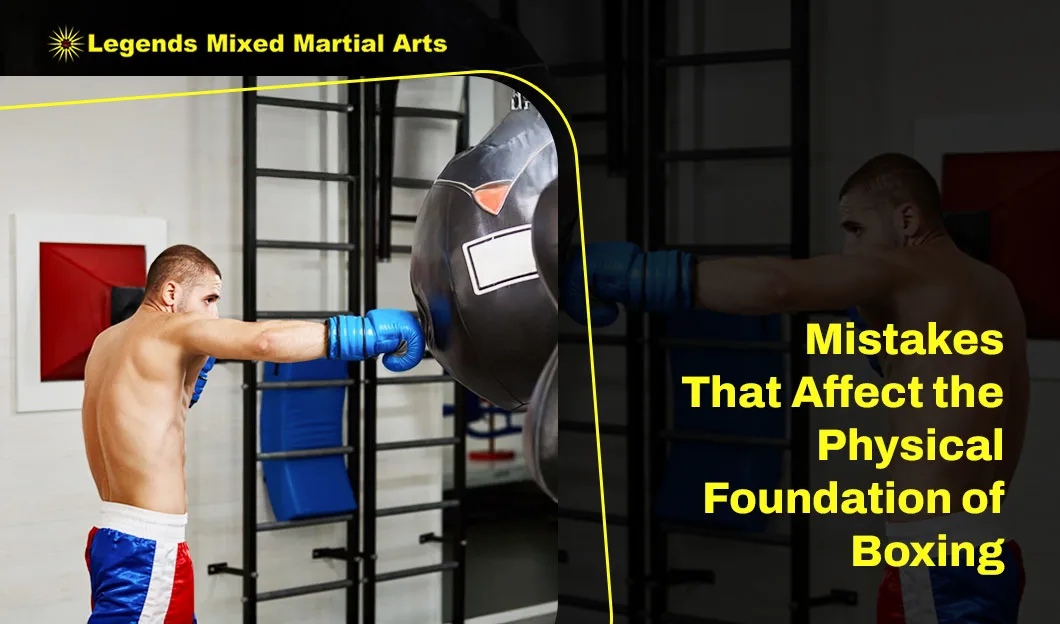
The mistakes listed here are both physical and visible. A qualified coach can spot them within the first few sessions of beginner boxing training. Most students do not realize they are making them because their incorrect technique feels completely normal until someone with experience points it out.
Mistake 1: Neglecting Your Stance and Footwork
Your stance is the foundation of everything you do when in the ring. An unsteady or weak stance will render your punches weak, make you unable to defend yourself, and restrict your movement. Many beginners think that learning the proper boxing stance is just a formality to quickly get over, but trainers in any trusted boxing gym in Brampton will tell you that the opposite is true.
A correct boxing stance means:
- Feet shoulder-width apart with your dominant foot placed slightly behind.
- Knees soft and slightly bent, never locked.
- Weight distributed evenly so you can move in any direction without resetting.
- Hands up, elbows in, chin slightly tucked.
The other aspect of this equation is footwork. Many new boxers stand flat-footed. Flat-footedness prevents the boxer from generating force and angle. In boxing, power is not simply supplied by the arm. Power comes from the ground, through the legs, and turns through the hips to deliver the punch. Without good footwork, the chain never connects.
Mistake 2: Holding Your Breath When You Punch
Breath control is one of the most underestimated fundamentals in boxing, and it is one of the quickest things a trainer can spot in a new fighter. Most novice students unintentionally hold their breath and throw combinations. This unnecessarily strains their muscles, reduces punching speed, and fatigues them faster than it should.
Rather, with each punch practice the habit of exhaling powerfully. This serves two purposes. First, it helps engage your core throughout the movement, protecting the body and keeping your torso stable. Second, it ensures a proper supply of oxygen so you do not run out of breath and can endure combinations longer.
Practise this during shadowboxing, which is boxing against an imaginary opponent without contact, before it becomes natural under pressure. If you wait until sparring to work on your breathing, the adrenaline response will override the habit entirely, and you will revert straight back to holding your breath.
Mistake 3: Training Offence and Ignoring Defence Completely
Most beginners mainly concentrate on offence. Defending against punches becomes less important than learning how to attack. As a result, although they can jab well, their defence suffers when faced with punches from opponents.
Core defensive boxing techniques include:
- The slip: rotating the head slightly off the centreline to avoid a straight punch
- The roll: dropping under a hook by bending the knees, not the waist
- The parry: redirecting an incoming punch with an open glove rather than absorbing it
Ignoring these techniques not only puts you in danger during sparring but reduces your ability to attack. A fighter who does not know how to defend himself will be too busy worrying about protecting himself to think strategically. The truth is that defence and offence are always interconnected.
Mistakes That Affect Your Long-Term Boxing Development
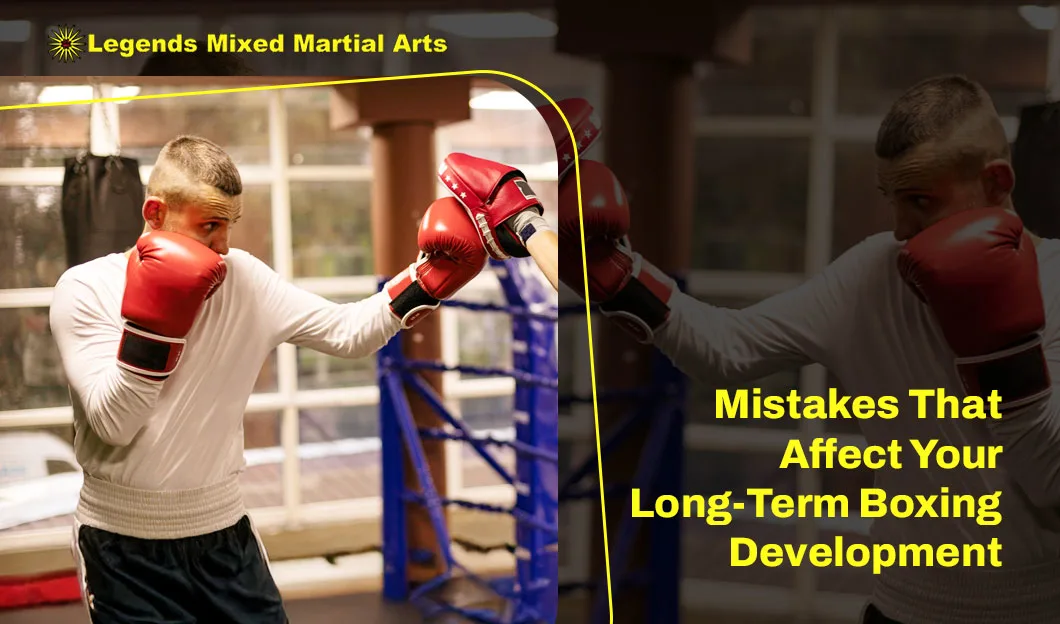
The next three mistakes are less visible than poor stance or held breath, but their impact on long-term progress is just as significant. Coaches who teach boxing lessons in Brampton see these habits consistently, regardless of a student’s age, fitness level, or athletic background.
Mistake 4: Overtraining and Skipping Recovery
New boxing students often equate more training with better training when they take classes in Brampton. They come for every available session, continue training at home, and even skip rest days because they believe rest means losing time.
Overtraining in the first month leads to:
- Persistent muscle soreness that reduces the quality of every subsequent session.
- Decreased reaction time and coordination, which worsens technique under fatigue.
- A higher risk of minor injuries that force longer breaks than any rest day ever would.
Two to three structured sessions per week work well for most beginners, though the right frequency depends on your current fitness level and recovery rate. This gives the nervous system enough time to absorb and retain new movement patterns like footwork, punch mechanics, and defensive positioning before the next session adds more. This approach also helps muscles recover and prevents students from getting bored and dropping out before they achieve their goals.
Mistake 5: Training Without Qualified Instruction
This mistake affects every other one on this list. A beginner without a qualified coach has no reference point for what correct technique looks or feels like. Bad habits can develop quickly, feel completely normal, and the longer they go unaddressed, the harder they become to fix.
Boxing fitness classes and online tutorials have their place, but neither can replace real-time feedback from a coach who watches your movement and corrects it on the spot. When you find a good boxing gym in Brampton with qualified instructors, the speed of your improvement increases noticeably. Mistakes get caught in session one rather than session thirty.
Mistake 6: Ignoring the Mental Side of Boxing
Boxing is not just a sport of physical strength; you also need mental strength for this. Beginners often focus only on physical work and overlook the mental side, which is also essential for success. These boxers need to develop skills such as reading their opponent, controlling their emotions after being punched, and making the best choice at the right time.
Brampton boxing lessons that include proper sparring and structured drill work help students improve both their tactical and technical skills. You start by focusing on one objective per round instead of trying to do everything at once. This builds the habit of processing information mid-combination, so you are not just reacting physically but also reading the situation and adjusting your approach in real time.
The six mistakes covered in this blog are not about talent or effort. They are about knowing what correct technique looks and feels like before bad habits have a chance to take hold. Poor stance, holding your breath, neglected defence, overtraining, unqualified instruction, and an underdeveloped mental game are patterns that consistently hold beginners back from the progress they are genuinely capable of achieving. Catch these mistakes early and every subsequent month of training becomes more productive. If you are ready to start boxing classes in Brampton with coaching that identifies and corrects these habits from day one, Legends MMA offers structured beginner programs built around real technical development. Contact us today and see the difference proper instruction makes tomorrow.