
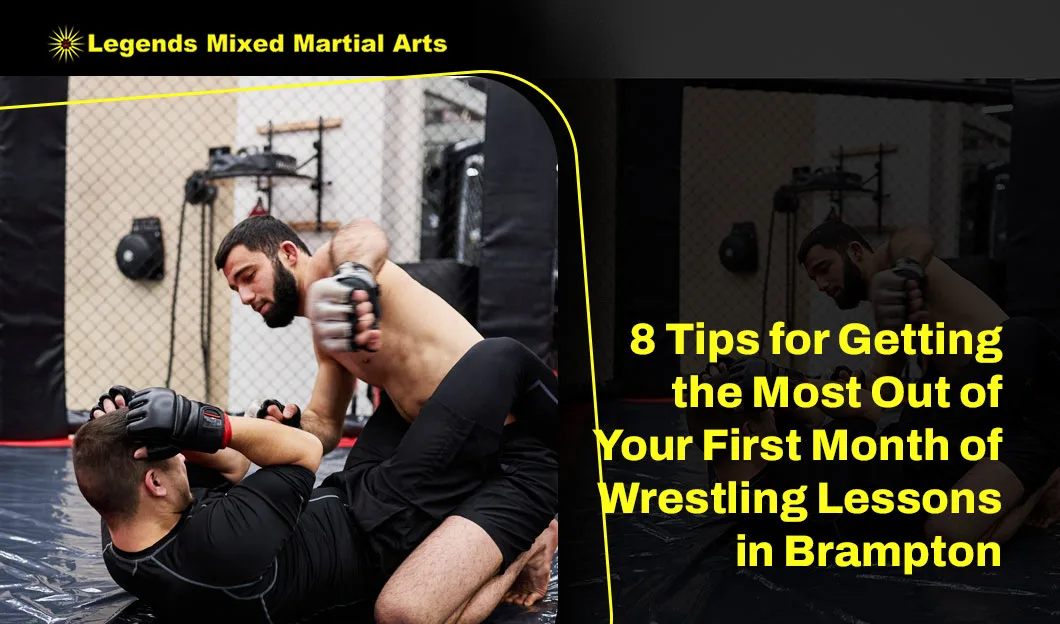
Your first month of wrestling is not about winning matches or mastering advanced technique. It is about building the right foundation so that everything you learn afterward actually sticks.
Many beginners walk into wrestling training in Brampton expecting to feel capable within a few sessions. But that is far from the reality of the sport. The sport has a longer development curve than most people expect, and the habits you build in that first month shape how quickly you improve for months afterward.
The decisions you make in those first four weeks matter more than most students realize. How often you show up, how you approach drilling, and whether you take recovery seriously all play direct roles in your progress.
Here you will learn practical tips to help you maximize your first month of wrestling lessons in Brampton. We cover technique, mindset, physical preparation, and training strategy.
Key Takeaways
- Your wrestling stance is the foundation every technique builds on, so get it right before you attempt takedowns or live sparring.
- Showing up to every session in month one matters more than how hard you push when you are there.
- Drilling builds correct technique, not winning the round against your partner.
- Stretching before and after every session protects your body and keeps you on the mat consistently.
- Ask your coach for one thing to prioritize each week so your attention does not scatter across too many skills at once.
- Set small, specific weekly goals so your training has direction, and your progress is something you can measure.
- Losing in your first month of wrestling is normal and expected, so treat every loss as feedback, not failure.
- Get wrestling shoes and headgear before your second session so you can train safely from the start.
How Do You Get the Most Out of Wrestling Classes as a Beginner?

These tips apply to anyone starting wrestling classes in Brampton for the first time, including adults, teenagers, and kids. If you are a parent researching whether wrestling is the right fit, it is important to know about the benefits of wrestling for kids before diving into the tips below.
Each tip addresses a specific part of how to structure your first month.
Tip 1: Learn Your Stance Before You Focus on Anything Else
Your wrestling stance is the starting point for every technique you will ever learn on the mat. A correct stance means feet slightly wider than shoulder-width apart, knees bent, hips low, back flat, and weight balanced evenly across both feet. Keep your arms active, not hanging at your sides.
If your stance is wrong, your takedowns will not connect, your defence will break down under pressure, and your balance will give way in live rounds. Coaches at any reputable wrestling school invest in this in the first few sessions because every move you add later builds directly on top of it.
Do not rush past this to get to more exciting material. One solid week of drilling your stance correctly is worth more than three weeks of learning moves on an unstable base.
Tip 2: Show Up to Every Session in Your First Month
Wrestling has a longer development curve than most sports. Your progress in month one depends almost entirely on how often you show up, not on how much natural ability you bring.
Missing sessions does not just slow you down. It breaks the physical and mental adaptation your body builds through consistent repetition. Brampton wrestling coaches consistently identify attendance as the single biggest factor separating beginners who develop quickly from those who plateau early. One of the clearest benefits of wrestling training is that it rewards showing up.
Set one simple rule for your first month: attend every scheduled class without negotiating with yourself.
Tip 3: Drill for Correct Technique, Not to Win the Round
Many new students try to ‘win’ during drilling rounds. This is one of the fastest ways to build bad habits, because you end up relying on strength and reaction rather than on actual technique.
Drilling is not sparring. Its purpose is to repeat a move correctly enough times that your body learns it without conscious thought. Finishing the drill round with more points or more successful moves than your partner means nothing in isolation. Doing the move precisely fifty times in a row means everything, because sloppy habits developed in early drilling become liabilities in live competition later.
The benefits of wrestling training only stack up when the technique you reinforce is correct from the start.
Tip 4: Stretch Properly Before and After Every Session
Wrestling puts your hips, hamstrings, shoulders, and neck through ranges of motion that most people never use in daily life. Going into a session without preparing those muscles increases your risk of injury and reduces how much you can get out of each class.
Before training, use dynamic stretches, including leg swings, hip circles, and multi-directional lunges, to warm up your muscles while they are moving. After training, static stretches held for 20 to 30 seconds help your muscles recover and improve your flexibility over time. A proper stretching routine for wrestling targets the specific muscle groups that wrestling demands most, including your groin, hamstrings, and lower back.
Skipping this step is a common reason why beginners end up sore enough to miss sessions, which directly undermines the consistency that matters most in month one.
Tip 5: Ask Your Coach What to Prioritize, Then Stick to That
Your coach can see what you need to work on faster than you can identify it yourself. Most beginners spread their attention across ten things at once in month one, which means they do not sharpen any single skill meaningfully.
After your second or third session, ask your coach directly: what is the one thing you should be drilling this week? Coaches at a good wrestling school in Brampton will give you a specific, clear answer. Your job is to take that answer into every remaining session of the week without looking for shortcuts. Some students also schedule private wrestling lessons mid-month specifically for this kind of focused, individual feedback between group sessions.
Building one skill properly is how to properly develop wrestling technique.
Tip 6: Set Small, Specific Goals at the Start of Each Week
Generic ambition does not produce progress in wrestling. Telling yourself you want to “get better” gives you nothing concrete to measure or work toward in a single session.
Set one specific, achievable goal per week instead. That could be landing a particular takedown five times in a drilling round, or stopping your base from breaking in live rounds. Specific targets keep your wrestling lessons focused and give your coach something clear to track your progress against. The most common mistakes young athletes must avoid start here: vague effort without clear direction is one of the main reasons why beginners stall after month one.
Small weekly goals compound. By the end of month one, you have four weeks of targeted progress rather than four weeks of general participation.
Tip 7: Get the Right Gear Before Your Second Session
Most beginners arrive at their first wrestling classes in general athletic wear, which is fine for session one. By your second session, you need the right gear; specifically, wrestling shoes and headgear.
Wrestling shoes give you the grip and ankle support your feet need for quick direction changes and takedown attempts. Headgear protects your ears from repeated friction against the mat and your training partner’s body, which causes a condition called cauliflower ear if left unaddressed.
In group wrestling classes, the right gear protects you and your training partners. In private wrestling lessons, it protects your ability to stay on the mat and keep progressing without interruption. Ask your coach at your Brampton wrestling gym what specific gear they recommend before you buy anything.
Tip 8: Accept That Losing Early Is Part of the Process
Most beginners in wrestling lose most of their live rounds in the first month. This is not a sign you are doing something wrong. It is a sign that the training is working exactly as it should.
Every loss in a controlled training environment tells you something specific about where your technique breaks down. The faster you stop treating early losses as failure and start treating them as feedback, the faster your technique develops. Expect to lose in your first month. Show up anyway.
Your first month of wrestling sets the direction for everything that follows. Show up consistently, learn your stance before anything else, drill for correct technique rather than results, and take stretching and recovery seriously from day one. Ask your coach for specific direction, set clear weekly goals, get the right gear before your second session, and treat every early loss as information rather than a setback. Wrestling training at Legends MMA in Brampton gives you the right structure, coaching, and environment to put every one of these eight tips to work from your first session.
People Also Ask
What are some tips for wrestling beginners?
Focus on your stance, attend every session, and drill for correct technique rather than results. Consistency and attention to detail matter more than athletic ability in the first month of wrestling.
Is fourteen too late to start wrestling?
Fourteen is not late at all for wrestling. Many competitive wrestlers begin around that age and build strong technical foundations within their first full year of consistent training.
What are the seven basic wrestling skills?
Wrestling is built on stance, motion, level change, penetration, lifting, back step, and back arch. Coaches at Brampton wrestling programs introduce these progressively, so beginners are not overwhelmed all at once.
What should I eat two hours before wrestling?
A light meal with easily digested carbohydrates and moderate protein works well two hours before wrestling. Good options include rice with chicken or oats with a banana. Avoid anything heavy or high in fat before training.